Author Archives: Eileen
Hubris (Part One)
A long time ago, when I was in my mid-twenties, I became disillusioned with religious institutions. Since I had been brought up in one that declared itself the infallible mouthpiece of God, I was also disillusioned with what had passed for God up to that point in my life.
My father’s premature death and the inequalities and suffering I saw in the world convinced me that if there was a God, I didn’t like him very much. Not liking God was uncomfortable, to say the least, since the feeling might well be mutual. It was easier to just not believe in one.
I simply abandoned God to a mental file labeled “Probably Not,” and proceeded to enjoy a reasonably affluent lifestyle of many delightful pleasures. The problem with a life of pleasure is that it is addictive. It took more and newer pleasures to keep my naturally questioning mind turned off. And my children were becoming old enough to ask me some of the questions I was avoiding. At the same time the increasingly blurred edges of society’s moral boundaries left me without the guidelines that had kept me safe from the more destructive human behaviors while I was growing up. I finally admitted that the life I was leading was becoming increasingly bereft of any purpose that I truly valued.
I began a search for meaning. I had read most of the classical philosophers, the thinkers of the enlightenment, and contemporary books about the death of God. But I had never actually read the entire bible, so I decided to start with the scriptures. I read it from Genesis through Revelation. Since I brought a skeptic’s mind set to the project, I had also thrown out most of the interpretations I had been taught or exposed to in daily life. So, in some ways, I came to the scriptures without preconceived opinions. I was surprised by the relevance of many of the ideas, though puzzled by obvious contradictions. The claims about Jesus and his promises to his followers challenged my credulity, but set off a tiny wistfulness deep within me. Mostly, reading the scriptures just increased my hunger for meaning and purpose.
So, I began a search that eventually included taking introductory classes in several of the major Christian denominations and a couple of courses at Vanderbilt University’s Divinity School, one of which was on world religions other than Christianity, and initiating discussions with church attending friends about some of the more difficult to believe claims made in the New Testament.
The major denominations seemed to all emphasize certain (and different) parts of the New Testament, while ignoring others. The part about give all you have to the poor appeared universally unpopular. The humanity of the person, Jesus, seemed pretty much unexplored, though the miraculous was also downplayed.
Modern Christianity was a very anemic version of what was described in Acts. In fact, it looked mostly like a combination of an insurance policy and a spiritual country club, rather than the life and world-changing force it claimed to once have been.
I came to the conclusion that Jesus was a good man, but a somewhat delusional idealist, who got himself killed. I sadly put Christianity and God back in my file that was labeled Probably Not.
Since humanity was on its own, then it was up to us to pull ourselves up by our bootstraps and try to make our planet a better place to live for future generations. I began to invest some of the time and energy I had spent first on pleasure, then on seeking God, to a search for meaning through working for justice for those still disenfranchised under our political system.
(to be continued)
Hubris (Part Two)
My father was a crusading newspaper editor in Houston, Texas. In the fifties, before the civil rights movement had begun to gain momentum, he publicly supported the first black to run for a position on the school board. This wasn’t about integration. It was just a matter of giving blacks some representation for their own schools. Late on the night of the election, someone set off a small, but potentially fatal bomb in the entrance hall to our apartment after ringing our doorbell. Though at that late hour I had enough sense to stop short of opening the door, I was close enough to recognize the danger and to feel the hatred it represented.
After marriage, I moved to Nashville, Tennessee, where I was part of a relatively affluent social group. One of my Candy Striper, hospital volunteer friends came to a party full of righteous indignation over being asked to carry a black newborn baby out to the car. More and more I began to feel like a misfit in the life I was leading. So, I looked for ways to concretely work for justice for the disenfranchised. I started by going to a black elementary school to tutor young children having problems learning to read. Eventually, I volunteered for Project Equality, which involved working in the NAACP offices, interviewing, and signing up people that were looking for employment. Then I would go back to my own neighborhood and approach business owners about employing the people I had interviewed. Needless to say, other than jobs for physical labor, I was unsuccessful in my attempts.
By this time, the Civil Rights movement was gaining momentum. I was working in the NAACP offices on the day the Poor Peoples’ March on Washington came through Nashville. The more extremist black groups were in the office that day. It began to seem to me that unless a miracle happened, we were headed for a bloody race war. In hind sight, Martin Luther King and his message of non-violent protest was that miracle.
I began to search for something that would change people, not just laws. I went back to college to study Psychology and could see that it did have the potential for changing people who wanted to change. But, that was the rub. Most people either have no desire to change or can’t admit they need help to change.
About this time a couple who were part of our group of friends, began to talk about Jesus at parties. You could see people moving away, when Judy and Earl came in the door. The next thing we knew, Earl had given up his job in the family business, they were selling their home, and soliciting donations to support them in a full time ministry of evangelism with Campus Crusade for Christ. Most of us figured it was a temporary aberration and hoped they had set up trust funds for their children’s educations.
But, in my heart of hearts, I envied them believing in something enough to give up at least their lifestyle for it.
(to be continued.)
Hubris Three : Unless You Come as a Child
I have two previous posts titled Hubris One and Hubris Two. This one, Hubris Three, will make more sense, if the others are read first.
In Hubris One and Two I describe my spiritual journey during my twenties: of rejecting my childhood faith, a period of settling for pleasure in hedonism, an unsuccessful search for God in Religious Institutions, a search for purpose and meaning through working for civil rights, and then seeking a way to change hearts and minds, not just laws, by getting a degree in psychology, then recognizing that psychology also had serious limits, since most people don’t admit they need to change.
About this time, one of the couples in our social group began to talk and act strangely. Judy and Earl began to drink less, dance with each other, and finally to our horror, would mention Jesus Christ, as if he were someone they knew, not just an exclamation. Since they were our friends, most of us overlooked these aberrations and tried to not be too obvious, when we edged away from their inappropriate cocktail party conversations.
Soon however, they got our full attention, when they announced that Earl was giving up his job in his family’s company. And they were selling their home and expensive toys to work full time for a nondenominational, nonprofit organization called Campus Crusade for Christ.
We had to admit that was “putting your money where your mouth is!”
Most of us decided that it was temporary insanity. They’d get over it and we hoped they had set up trust funds for their children.
And I shrugged aside my feelings of envy of their believing in something enough to stake their whole life on it.
Judy’s sister was my best friend. She was much less assertive than Earl and Judy, but she finally shared with me that she had a new faith, a personal relationship with Christ, not just a church or religion. She couldn’t articulate it very well, but at this same time, her husband abandoned her and their two young daughters. Her strength through this devastating experience made it obvious, that whatever it was that she had discovered, it made a difference even in heartbreak.
In the middle of Hilde’s beginning over, Judy and a team of women from Campus Crusade came to town. Judy asked Hilde to host a Christian Coffee for her friends. I rallied our friends to help Hilde. I invited people saying, “I don’t know what a Christian Coffee is. I didn’t know our usual ones weren’t! But the talks will be short and the food will be fantastic. Come for Hilde’s sake.”
At the coffee, several women gave talks describing how they now had a “personal relationship” with Jesus Christ, since they had accepted Him as their Savior and Lord. I didn’t really understand what these words meant and I wasn’t very comfortable with the simplistic religious language. My ears perked up, however, when they mentioned freeing insights into their own behavior patterns, improved relationships with their families, and a greater concern for others outside their limited social and racial group.
Obviously, whatever this experience was, it made concrete differences in the quality of their lives. And it was free, no college tuition or counseling fees.
When they led us in saying a prayer asking Jesus to be our Savior and Lord and to make us into the people He wanted us to be, I balked, blocked by my usual need to understand things intellectually first.
As others were weeping and hugging one another, I started gathering up dishes. But one of the women cornered me, asking if I had said the prayer. I said, “No, I can’t. I don’t believe in God and I think Jesus was a wonderful person, but an unrealistic visionary that got himself crucified.”
This woman was not deterred. She responded immediately, “Well, why don’t you just say the prayer this way, Jesus, if there is a God, and you are who you claim to be, please be my Savior and Lord.”
That threw me for a loop. It seemed like a win-win proposition. If none of it was true, I had nothing to lose. And if it was true, I certainly didn’t want to miss out on it. So, I prayed the prayer with her and accepted her hugs and congratulations, and went back to my Martha activities.
As I washed Hilde’s lovely china by hand, I listened to everyone celebrating around me and wondered if the prayer would ever make any difference to me.
Suddenly, feelings of sheer joy overwhelmed me. Somehow, I knew in that moment with my whole mind, heart, and spirit, that God was real and that He loved me unconditionally, even when I was denying Him. Teachings from my Catholic childhood, readings in the Bible, ideas from the Protestant classes, and insights from my study of Psychology all came together like pieces of a puzzle finally forming a whole picture.
But the most important part was the total confidence I now had, that I was completely known and deeply loved, faults and all, no brownie points necessary to earn it. As I drove home, bursting with joy, I tried to think of an appropriate song or hymn to sing. Although lovely, the Latin hymns of my childhood didn’t really fit the moment. Finally the child’s song, Jesus Loves Me, began to bubble up and out of me. Tears and joy overflowed as I sang at the top of my voice. And I realized that these simple words expressed perfectly what I knew now, that I did not know before.
In the next two years our group of women from most of the major denominations and one member from the Jewish faith came together each week to read the Scriptures and share our experiences of God in our daily lives. Many had always been active in their churches, but had never experienced this kind of relationship with Christ and God. For some the new understanding and deeper realization of the love of God came quietly, but steadily. For others, like me, it came almost like an explosion. But, in all of us, the Spirit began to bring new self-honesty, openness, and greater concern for others. The more we grew in our awareness of God in our lives, the freer we became to forgive ourselves and others and to love in new ways.
Although some things changed quickly, others did not. And we began to see more clearly that growth really is a life-long process, that needs nourishment from many sources: prayer, Scripture, the wisdom of others who have walked before us, and even humanity’s growing knowledge of Psychology and Biology. And perhaps most important, the acceptance and support of each other in our journey together.
Part of my new awareness was how ridiculous it was that I had thought that because my limited human mind could not make sense of God, then of course, God couldn’t exist. What HUBRIS!!
Humbled, but filled with the love of God, I began to see God everywhere, to experience miracles large and small. It’s like putting on God glasses. Reading the Scriptures was like reading letters from God. Meaning simply poured off the pages.
And I wanted to share this new life with those I loved and with anyone God brought into my life.
Our group helped give another Christian Coffee and grew too large , so we divided into smaller sharing groups. We witnessed miracles where God seemed to intervene concretely in our lives. But then, we also learned to trust His love, when we humbly shared the pain and faith of one of our members dying with cancer.
Since our focus was on hearing God in the circumstances of our daily lives, we were able to hear through our different religious languages to our basic unity in the Spirit of God.
Each of us became more active in our own denominations and became involved in renewal movements within them.
Personally, in the forty-five years since that first “Christian Coffee,” I have found that simply belonging to a main stream denomination does not provide enough spiritual nurture without having a support group of those, who have also experienced a changed life through a personal relationship with Christ as Savior and Lord.
I have also found that ecumenical sharing groups have the best chance of avoiding making idols of denominations and empty religious observances. They seem to stay focused on growing in their personal relationships with Jesus as Lord better.
And I have learned that for diverse people saying the prayer accepting Jesus as Savior and Lord can play out very differently. We come into the circle of God’s love in different places with our unique histories and patterns and personalities. Don’t ever try to put God into a box, however wonderful it seems to you. God is bigger than any of our experiences, rituals, beliefs.
God meets us where we are and respects who we are, because He made us and knows us better than we do, never-the-less anyone else can.
The Spirit
Unexpected geyser
exploding joyously
a baptismal spectacular
opens our eyes.
“Come and See”
Tears of waterfalls
stirring lonely pools,
the reconciling Spirit
invites us gently.
“Follow Me.”
Hidden river flowing
with silent, ageless strength
transforms and renews
our hearts of stone.
“Drink of me.”
@Heather, please read this. It’s the blog site I’ve been telling you about. This post has possibilities for Hadley’s group.
 Raising 5 Kids With Disabilities and Remaining Sane Blog

I work with a social/educational/recreational group for teens with disabilities. When first getting this group together at the beginning of the school year, I asked them what they wanted to do as part of our program. Every single one of them said they wanted to “help other people”. Here are students with a variety of disabilities and medical needs, and they wanted to help others! They were mature enough to look beyond their own problems to the problems of others.
Various suggestions were tossed about; opening a soup kitchen, visiting with the elderly in nursing homes, working at the local pet shelter, and so forth. I suggested the easiest thing to do would be something we could do as a group within our program. They chose making sandwiches for the homeless.
Every other Saturday we meet. Yesterday we had some social skills activities, some recreation, (does anyone remember the…
View original post 337 more words
Messages from God
I’ve never gotten a message from God in a bottle, but I’ve gotten them a lot of other ways. God is amazingly creative in getting His point across.
When our five children were still young, my father-in-law gave us a side of beef every Christmas. One Christmas some friends with seven children were starting a new business and money was in very short supply. So, my husband and I decided to share some of our beef with them.
Now, I had by this time read the Scriptures quite a lot, so I was very familiar with the many times and ways Jesus told us to love others as ourselves, to share what we have, and even His comparison of the poor woman who gave all she had and the rich man who did not.
But as I loaded a basket with hamburger, pot roasts, and even some round steaks, every time my hand hovered over the sirloin, T bone, and ribeye steaks, I drew it back. I dearly love good steaks and there were many years in my life when I couldn’t afford them. I rationalized that the cheaper cuts would go much further with seven children. So I didn’t share any of the expensive steaks.
The next weekend we went out of town for two days, so I left the garage door up about a foot, so the cat could come and go and get his food. When we returned, all seemed well, until I went to the freezer in the garage to get some meat for dinner. The bottom two shelves, where all the expensive steaks had been, were completely empty. Nothing else was missing.
I got the message.
I asked God’s forgiveness, but I also admitted that I would really, really like to know how He did it.
A couple of days later, a neighbor who lived a block downstream from us on the creek that ran through our back yards, told me excitedly about all the mysterious expensive steaks her dogs were happily devouring in her back yard. Later that same day my next door neighbor mentioned that she had noticed the three year old from across the street crawling in and out of our garage over the weekend.
Evidently frozen steaks make great boats to sail down the creek and only the expensive ones were in her reach. I was so relieved that the little girl hadn’t gotten trapped in the freezer, that I no longer begrudged anybody, even the dogs, the expensive steaks.
Some years later, the nuns where I taught first and second grade, protested that I needn’t have given them any steaks in their Christmas basket, just hamburger would have been fine. I assured them with great conviction, that I really did need to give them some steaks with their hamburger.
I do get the message eventually.
A perfect description of the blessings of blogging friendships. Perhaps distance makes it easier to be real, to risk, to affirm. Whatever the reason is, the bloggers I follow relate to others more freely and on a much deeper level. I have had several friendships like this in “real” life, but at my age, many have disappeared into the clouds of senility or passed on to a better place. Though I’ve come to treasure solitude, relating on a deeper level with blogging friends means, even if I become housebound or bedridden, I never have to be lonely. What a blessing for us old guys.


My five year old son has tons of friends. Part of the reason why he is so blessed is because he calls anyone he likes, plays with, talks to, or looks at his friend.
“My friend is digging a hole to bury Darth Vader in,” Jett mentions as we leave the park.
“Which friend is that? What is his name?”
“I don’t know his name. He is just my friend.” Looking at me like I don’t know what friend means.
The look might be justified. Maybe as we grow older we forget what a friend is. I can’t tell you how many people have questioned me about my friendships. I am/used to be friends with some pretty famous people. Other “friends” would always say things like, “you’re not really friends with so-and-so. Just because you met someone does not mean that they are your friend.” I would counter, “Well, I’m…
View original post 814 more words
God is in the Timing
David Hume once said that there really isn’t any way to prove a relationship between a specific cause and effect.
Today, we try to show statistical probability, if we can control all the variables. However, statistics is a much abused tool, because very rarely, if ever, can we be sure we have eliminated all possible causes other than the one we are measuring in a particular relationship.
That said, I’ll be offering several small stories from many unproven, but to my prejudiced mind, probable answered prayers.
Years ago we were a home away from home for young people traveling in a non-denominational Christian repertory theater ministry. Teams of four or five covered different areas of the country, but at Thanksgiving one year three different groups called to ask if they could spend the holiday with us.
We had started a new business the year before in what unfortunately had turned into a recession and work and money were now often scarce. After some serious prayer, I agreed to add fifteen hearty eaters to our family of eight. When I mentioned the Thanksgiving invasion to some friends, they kindly offered a couple of venison roasts for our meal. The next morning an unprecedented gift of several ducks and a dozen quail arrived by mail from a distant relative. We now had the ingredients for an authentic Thanksgiving feast.
What we didn’t have was a chef. My cooking skills are minimal. And I had never cooked any of these before. I did wonder if I wasn’t pushing a bit, but the knowledge that if I ruined any of these gifts, there wasn’t going to be a Thanksgiving dinner, prompted me to ask God for someone to cook our feast. In my experience with prayer, there’s a test of faith before the answer. This was no exception. The first two vans of hungry young people arrived the morning before, none of whom admitted to any cooking experience, but who did pool their resources to buy some pies to add to our meat and vegetables. The last group arrived late Wednesday evening, after I had stepped out in faith and begun thawing all our treasures. I stood at the door welcoming each as they came in the door with the question, “Do you by any chance know how to cook ducks and quail?” The next to last person, replied, “No, but Chris used to be a chef at a fancy restaurant in San Francisco. Maybe he does.”
And yes, the very last person out of the van was Chris and he did indeed know how to cook all the wild things God had sent for our Thanksgiving feast.
Luke 12:29 And do not keep striving for what you are to eat and what you are to drink, and do not keep worrying.
I confess that I am a congenital worrier, but the goodie for that baddie is that being a wus leads to constant prayer and prayer kindles an awareness of God.
The Church of Devout Cowardice
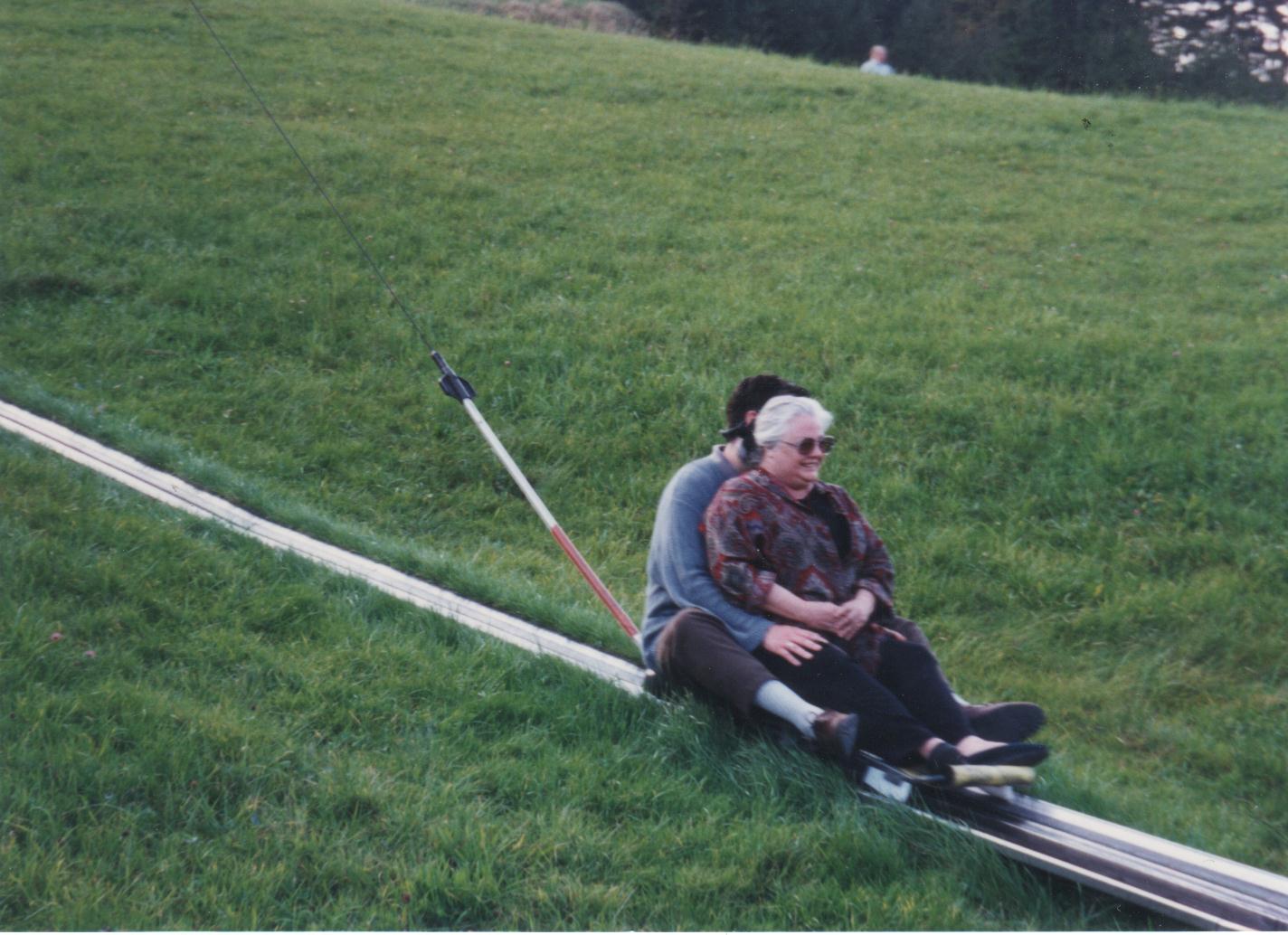 Early in life I became a charter member of the Church of Devout Cowardice. Physical pain and I were not friends. As a child, I had no desire to climb trees, jump from roofs, or do anything else that had the slightest potential for injury.
This devotion was reinforced in my late twenties when some friends urged me to join them on a ski trip. Though one friend teased me unmercifully about being such a wus, I was completely shameless about my compulsion for pain avoidance. The fact that this friend broke her leg getting off the ski lift on her first trip up the mountain definitely confirmed for me that “Avoid all risks” should be the first commandment of all true believers of the Church of Devout Cowardice.
Ironically, being so inclined to imagine worst case scenarios all my life led to a stress related illness that not only caused me a lot of pain, but also put me into a wheelchair in my late fifties and early sixties. During this challenging time of life, a son’s job with an airline gave us the marvelous blessing of thirteen years of free air travel to Europe.
Tourist sites in Europe are not known for their accessibility. Though I could walk short distances, hills and stairs were often too much for me. My son suggested a catapult for accessing castles and fortresses, but wus that I was, I demurred.
However, while we were on an innocuous Sound of Music day trip in Austria, the bus stopped to allow the foolhardy to ride down the side of a mountain on a sled with wheels in a very long shallow metal luge. My twenty-something son, obviously having inherited none of my antipathy to pain genes, decided to try it. I sat in my wheel chair on the loading dock as he began to get onto a sled built for two. Out of the blue, a wild thought occurred to me.
“I’m already in pain and in a wheelchair, what have I got to lose?”
Before my wus self could talk me out of it, I stood up and said, “Wait, I’m going with you.” My son and my husband were too stunned to respond, so I climbed on as the worker began to start the sled down the luge. I was in the front where there was a hand brake. As we began to hurtle down the mountain, my instinct for survival kicked in, and I tugged desperately on the brake. To my relief, we began to slow.
At that point, a nine or ten year old boy luging behind us began to tail gate and my son took charge of the brake. I scrunched my eyes shut as we suddenly seemed airborne. As much as I wanted to scream in terror, I couldn’t risk it, since either my heart or my lunch was in my throat.
I offered God my first born son, (not the one with airline privileges), if He would save me from certain excruciating pain. When we came around the last curve and began leveling out and slowing down, I peeked out with one eye. There was my husband waiting at the bottom looking as terror stricken as I felt. When he helped me out and into my wheelchair, he asked anxiously, “Are you all right? How was it?”
“Piece of cake,” I replied through gritted teeth. I never told him I meant my dessert from lunch.

