Category Archives: fear for the future
Inch Worms on the Plateau of Realism
I feel very sure just about everyone has blind spots or crazy spots in their personality. They come with the territory of being a human. I think they come with everyone’s DNA, but often, if not always, are intensified by experiences or lack of experiences in our impressionable youth.
One of my particular personality type’s blind spots is idealism, which is not bad if balanced with enough common sense. But unfortunately that seems to come to some of us very late in life. So, we develop survival mechanisms to minimize the pain of constant disappointment and frustration with the world, including with ourselves.
Some of us pick an idealistic goal in a particular area and simply focus on it with total tunnel vision while pouring all our energies into it. Unfortunately, eventually most of us either burn out or catch on that we can only inch toward ideals in this flawed and very unfinished world.
Others of us latch on pretty early to the pleasure principle….pleasures block pain…..so we eat, drink and make out with Mary or Harry. Eventually this either kills us, destroys our relationships or gets us run out of town, so we too are challenged to face the pitiful little realities of human existence.
So down deep many of us fear that what is actually driving us is congenital insanity. Naturally, we’d rather cling to an addiction, which we assure ourselves is either a virtue or else something that we could always get over, than face our fear that we are crazy. Because being crazy might not be something we are able to do anything about. Maybe all the world’s pills and all the world’s doctors couldn’t put our tiny cracked selves together again.
If we are lucky enough (or blessed) to find a source of love – just as we are, we can become able to bear the pain of disillusionment about ourselves and thus the rest of the world. Then most of us, after settling only temporarily in the valley of cynicism, will find our way to a reasonably satisfying existence as inch worms on the plateau of realism.
Blog Challenge: What is an Object that Has Meaning for You? Letter from Albert Einstein
At the age of seventy-eight very few objects have any meaning at all for me. My husband and I have downsized twice, ending up in an apartment so that we don’t have to worry even about inside repairs. Most things we have managed to find room for here are simply practical. So, I tried to think of what I would try to save in case of fire.
Many years ago when our house was threatened by fire, I loaded up our station wagon with my husband’s suits so he could continue to work, our large collection of family photo albums and several paintings I had done. By now, I’ve given most of my paintings to my children and the albums are being left in storage for them to sort out and divide. The truth is, I’ve always been focused on the future and my main interest has been in ideas that can help humanity survive and evolve.
The only object in our house that couldn’t be replaced and that has implications for the future of humanity is a letter signed by Albert Einstein in 1947 to my father, Ralph S. O’Leary, who was an award winning newspaper reporter at that time.
Emergency Committee of Atomic Scientists
Trustees: Albert Einstein, Chairman; Harold C. Urey, Vice-Chairman; Hans A. Bethe; T.R. Hogness; Philip Morse; Linus Pauling; Leo Szilard; V. F. Weisskopf
Dear Friend:
Through the release of atomic energy, our generation has brought into the world the most revolutionary force since prehistoric man’s discovery of fire. This basic power of the universe cannot be fitted into the outmoded concept of narrow nationalisms. For there is no secret and there is no defense; there is no possibility of control except through the aroused understanding and insistence of the peoples of the world.
We scientists recognize our inescapable responsibility to carry to our fellow citizens an understanding of the simple facts of atomic energy and their implications for society. In this lies our only security and our only hope – we believe that an informed citizenry will act for life and not for death.
We need $1,000,000 for this great educational task. Sustained by faith in man’s ability to control his destiny by exercise of reason, we have pledged all our strength and our knowledge to this work. I do not hesitate to call upon you to help.
Faithfully yours,
A. Einstein.
Perhaps this can be a reminder to a world of proliferating nuclear arms from the very men whose brilliance brought them into the world, but who recognized their own responsibility for their danger to humanity.
The Whisper
I hear my name whispered
in the new day’s softness.
I hesitate in the shadows.
Perhaps it was birdsong.
I hear it carried on the wind
much clearer now.
Still, I hide.
I am old and tired.
I have a longing in my heart
a hunger in my mind,
but I have tried and failed
so many times before.
I glimpse Abram and Sara
ahead in the mists
beckoning.
I cling to where I am.
Finally, I see a face
with eyes that see
into the darkness of my soul
and a smile so warm
it melts my frozen heart.
His hand reaches out,
as Jesus calls my name.
Here I am, Lord.
Can Misuse of Free Speech Be Considered Use of a Deadly Weapon?
In the 1950s our home in Houston, Texas was bombed, because my newspaper editor father had endorsed the first African American candidate running for a position on the local school board. Though no one was injured, as a teenager it was terrifying to feel so vulnerable to a hatred I couldn’t understand. So, I am certainly not an advocate for terrorism. And as both the daughter of one newspaper editor and the mother of another, I am a strong supporter of freedom of the press, but not of a press without a conscience.
Words can be as inflammatory as bombs, as most revolutions have proven. Certainly sarcasm and ridicule are generally recognized as deadly for peaceful relationships, whether personal or political.
The violence involving the newspaper Charlie Hebdo in France seems almost a chicken and egg situation with both sides shooting from the hip at anything they don’t like. We tend to applaud the revolutions seeking democracy, violent or not, because we understand them. Other than the Irish, most of us don’t understand the ones that use a religious excuse for violence as a way out of being helpless as a minority.
So much of the violence in the world, even genocide, grows out of a long and painful history of conflict, that is only known up close and personally by the participants. The rest of us only see the resulting boiling over of centuries of equally shared hate filled interactions.
I certainly don’t know the solution, but in my eighty-two years as an American, I’ve been taught to fear, and thus hate, the Germans, the Japanese, the Italians, the North Koreans, the Russians, the Chinese Communists, the North Vietnamese, the Pot Pol Cambodians, the Communist Cubans, Al Qaeda, the KKK and more.
Though I accepted America’s excuse of shortening World War Two by dropping atomic bombs on two civilian Japanese cities that resulted in at least 250,000 civilian casualties, from much of the world’s view, Harry Truman could be grouped with Hitler, Stalin, and Pol Pot as a mass murderer of the innocent.
How do we begin to break the unending cycles of fear and hate that perpetuate violence?
I oppose violence in any form, including vindictive, abusive, ridiculing, hate filled and irresponsible writing, cartooning or speech. Again, I wholeheartedly support the right of free speech, but not freedom from conscience or responsibility. Ridicule is not an effective response to any threat. It is self-serving egotism. It simply pours fuel on the fire.
Pouring fuel on the fires of hate and fear, however we do it, is not only immoral, it is self-defeating. Every one of us is called to become a peacemaker in whatever way we can. There are no winners in wars. Violence of any kind kills our souls.
The Future is no Scarier than the Past / Old Age has its Perks
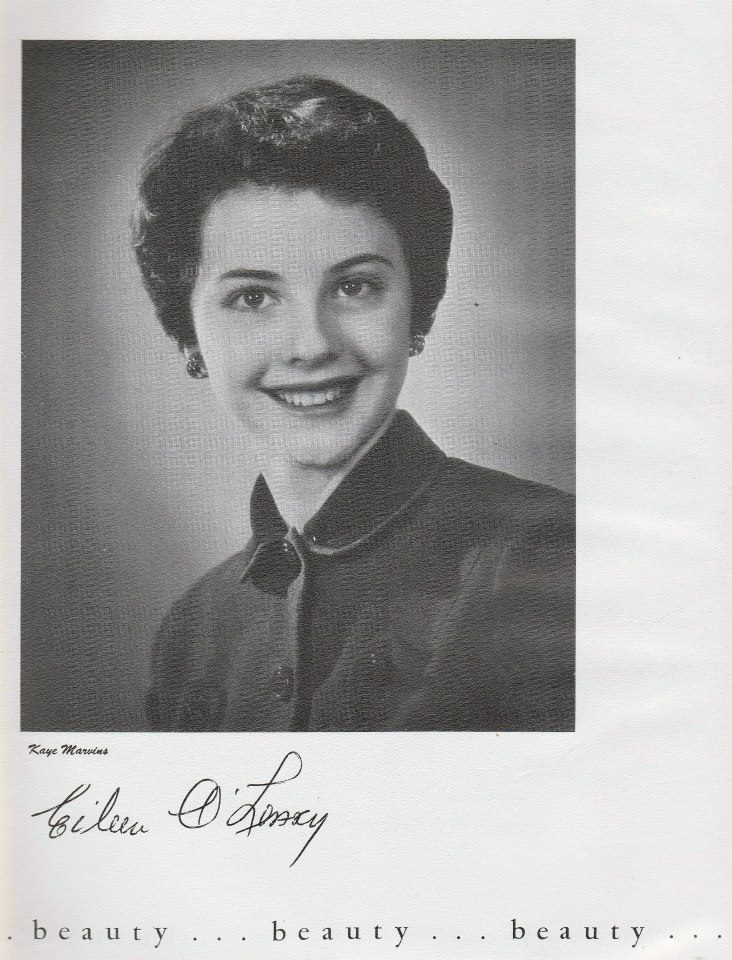
at 18
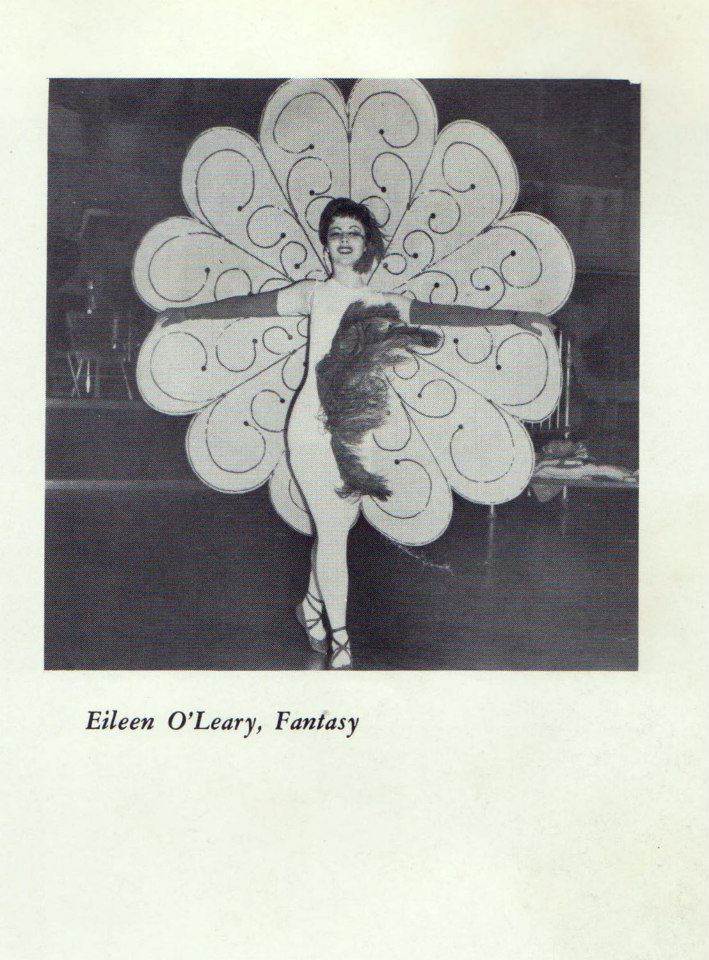
at 20

at 36 with my family

at 75
I finally figured out that all the people I ever was from infancy on still live inside me. It makes for an interesting group most days. And if I don’t like how I feel today, I just return and watch the world when I was having a better time. Young people actually seem impoverished, because they haven’t got a clue about the riches we old guys carry around within us. I wouldn’t trade, because we can go back and be their age inside our memories, but they can’t come forward and enjoy the pleasures of a party without having to drive miles, spend hundreds or pay later with a hangover.
We do know more dead people and we have seen more tragedies up close and personal, so sometimes we hover protectively over our grandchildren. But we can look back at the past and our track record helps us trust that grace will continue to get us through even the hard things the future may bring.
As bad as our world seems in 2015, anyone having experienced life even in America for almost eighty years has witnessed a lot of rough history. Though we now know more about the evil in the world than we once did, the evil was always there. I find when I focus on the evils we haven’t overcome, I fear for coming generations. But when I look back even just on the changes in the world that I have experienced personally, I become more hopeful for the future.
Is having an armed presence in your school any more terrifying than living in homes with blackout curtains for fear of enemy bombers in the nineteen forties or huddling in a school hall during practice warnings of atomic attacks in the fifties. Is the number of families in this generation with members lost fighting in foreign countries anywhere close to the number in the second world war? Is fear born of lack of information as severe now as it was when we huddled around a radio to listen to news of Pearl Harbor or the beaches of Normandy. Children still die or are crippled from disease even in first world countries, but nothing like the numbers in the years before the polio vaccine. Are the numbers of African Americans isolated in ghettos, killed by police, harmed and held back by prejudice anywhere near the numbers in the fifties? Are all the top jobs in the corporate world still held by men? Are people still dying from aids at an alarming rate even in the first world? No matter how horrifying terrorists are today, have they managed inhumanity on the scale of Hitler or Stalin or Pol Pot and the Khmer Rouge, or even Harry Truman at Nagasaki? The answer to all of these is no.
Yes, there are new diseases, new dangers, new stresses and new groups struggling for equality. It is obviously not heaven on earth, but humanity is a work in progress. Our track record gives us reasonable hope that we will find ways to overcome more and more of these problems in each era.
Age, if we look at even our own life span’s historical picture, can give us a perspective.

