Blog Archives
The Spiritual Journey of a Liberal, Born Again, Spirit Filled Christian
Despite living most of my life in the South, I am a liberal in pretty much every way there is to be liberal. My father was an award-winning investigating newspaperman fighting injustice from early on. On the Saint Louis Star Times, he took on the largest arms manufacturer during World War II by exposing their selling defective ammunition that blew up in our own soldier’s rifles. He won several Journalism awards, but then he ended up in the army having to use their bullets.
In the early 1950’s in Houston, Texas with Dad still at the paper on an election night, our doorbell rang in the wee hours and I started down the stairs thinking maybe dad had forgotten his key. About halfway down, there was a loud boom at the front door sending me running back up the stairs. We called Dad, he called the police, and they called the FBI. The FBI decided that the bomb that left both sharp pieces of slate and confetti packing stuck in our door and the walls of the entry to our apartment was set off because as City Editor of the Houston Post dad had written an editorial supporting a black woman for the school board. It wasn’t even an issue of integrating the schools, just about getting some representation for segregated black schools. I struggled to understand how anyone would want to maim or kill someone they didn’t even know. And for the first time I had a glimpse of the fear black children and their parents live with all their lives.
Later, my father was in the running for the Pulitzer Prize after winning all the other Journalism awards for writing an expose of a pressure group that was secretly getting liberal University of Houston college professors fired.
In the nineteen sixties, I was married and living in Nashville, Tennessee. I started actively working for Civil Rights after one of my college-educated Junior League friends, who worked as a volunteer at our Catholic hospital, bragged at a party that she had refused to carry a “nigger” baby out to the car in front of the baby’s parents, I began tutoring children who couldn’t read in a black elementary school. Then I started interviewing blacks at the NAACP headquarters who were looking for work. I then tried unsuccessfully to find businesses in the white community to hire them. I was working in the NAACP offices the day the buses for the March on Washington stopped there. The sheer hatred for whites by the young SNCC and CORE members in those groups was as strong as white prejudice. I began to fear the threat of a bloody race war.
Martin Luther King spared us that.
As a Catholic from birth, I had four babies in my first five years of marriage. Because I was unable physically to deliver any of my babies without having Caesarian Sections, I was told that I was in danger of dying if I had another child in the next two or three years. Since the church taught that using birth control was a mortal “go to hell” sin, I asked our priest what to do. His response was that many children have had good stepmothers. After much soul searching, I decided that men who had never had wives or children should not be making this kind of decision for women. So, I quit the Catholic Church and because I had unknowingly made religion my God, I threw the “baby out with the bath water” and stopped believing in both Jesus and God.
For several years I lived a fun, but increasingly meaningless “party” life and dulled my unhappiness with alcohol. I had begun a search through classes on philosophy and World Religious at Vanderbilt Divinity School. Then, when my father died at only fifty-two, I intensified my search. After reading the whole bible, I took some introductory classes at other Christian denominations. I even read some of the “God is Dead” literature. But nothing brought any real enlightenment, though the book of Acts made me wistful.
Becoming alarmed about my struggle with feelings of inadequacy as a wife and mother and my need for alcohol to stay functional, I found a counseling group for alcoholics started by a Presbyterian Minister who had been though a similar battle. After a few months I broke down in the group weeping and admitting that I was so overwhelmed by the challenges of my life that I didn’t feel capable of loving anyone, not even my husband and children. Instead of judging me, the people in the group seemed to care and even feel sad for me. The next day as I was vacuuming my living room, I felt freed of self-hate somehow. As I stopped to just savor this new feeling, I had a sense of someone putting their hand on my shoulder in a supportive and loving way. My first instinct was it had to be Jesus, but then I questioned whether I even believed in Jesus. So, I put it in my mental file labeled, “Need more information.”
About that time friends of ours decided Earle would give up his Vice Presidency in his father’s company and sell their house so they could go to work as missionaries for Campus Crusade for Christ. I was shocked, but also a bit jealous that they had found something that mattered enough to give up their safe and very comfortable lifestyle. When they came back to town almost a year later, Judy asked her sister, my best friend Hilde, to host a “Christian Coffee” where several women would tell about the positive changes in their lives since they accepted Jesus as their Savior and Lord, I pitched in to help with it, telling people jokingly that I hadn’t known that our usual coffee get togethers weren’t “Christian,” but the talks would be short and we were going to have great refreshments.
The women’s descriptions of changes in their values and relationships appealed to me, but I still felt unable to make that leap of faith. So, when they led us in saying a prayer accepting Jesus as our Savior and Lord, I didn’t join in. And as the others were hugging and celebrating, I went into the kitchen to wash dishes. After a few moments the woman leading the group came in and asked me if I had said the prayer. I confessed that I had not, because I didn’t believe in Jesus or God. She didn’t blink or hesitate, she just said, “Well, why don’t you say the prayer this way, ‘Jesus, IF you are who you claimed to be, the Son of God and our Savior, take my life and help me to become the person God created me to be.”
I hesitated, but it seemed like a no-lose proposition, so I just nodded and said the prayer that way. She hugged me and congratulated me and I went back to washing the fragile china by hand, wondering how I would recognize an answer.
Suddenly, pure joy began bubbling up inside me. A feeling of being both known and loved in a way I had never experienced before overwhelmed me. I felt so joyous I was afraid I’d explode. Driving home I sang “Jesus loves me” at the top of my lungs with tears of joy streaming down my face.
This is the just the beginning of my journey as a liberal, born again, baptized in the Holy Spirit, Christian. My hope in writing this is that I will be able to flesh out the reality that a spiritual journey can include both liberalism and Jesus as Savior and Lord.
Is this You?

So me, lately. No one can really love me. I’m not good enough. I need to be perfect, or at least outstanding, to even love myself.
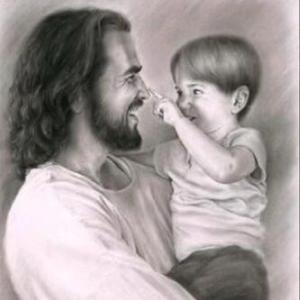
Unless we come as a child…….we miss the love of God expressed for us in Jesus. The just as we are, without one plea, kind of love.
We Are All Defective. It’s Another Word for Human.
This is a face book post by the author, Anne Lamott
We all secretly think we are defective–this is why our parents were unhappy, or unfaithful, or abusive, or whatever. Believing this gave us our only shot at control in households that were chaotic or cold: If we were the problem, then it meant our caregivers were good parents, capable of nurture and the healthy raising of children. And it meant we could correct our defects, and then our parents would be happy, finally, be nice to each other, and stop drinking.
I have spent 30 sober years healing from this survival tactic, of thinking I am annoying or a screw-up. I have just toured the country promoting a book on mercy, called HALLELUJAH ANYWAY, whose main premise is that if we practice radical self-care and forgiveness, this will heal us and radiate out to our families and communities, bringing peace.
However, I have done something so out there, so On Beyond Zebra, that it drew into question every aspect of that guiding principle (i.e., that I am NOT defective). I thought I was 80% over this. As a child, I agreed to believe it because it helped my family function and helped the other members feel better about themselves, because at least they weren’t screwed-up, annoying me.
But I have outdone myself. I have done something so amazingly incompetent and so profoundly inconvenient to so many people I love that it will allow you to forgive yourself for almost anything. I will be your new gold standard; you will no longer be secretly convinced that you have Alzheimer’s. You will think you are just fine and have been overreacting. You will understand why my son, Sam, so frequently mentions the website A Place for Mom to me.
So: six months ago, I was invited to give a talk at the 2017 TED conference in Vancouver. This was very heady stuff, as sometimes millions of people see these talks online and might want to buy your new book, saving you from financial ruin and having to go live at the Rescue Mission and live on government cheese, which is very binding.
So I wrote and sort of memorized my 15-minute talk, and my various caseworkers worked for months to get me to Vancouver this morning from Seattle, where I did a reading last night.
I got to the airport an hour ago, got out my passport, and tried to get a boarding pass for a flight I’ve been booked on and obsessing about for 3 months.
That’s when I’d realized I had grabbed the wrong passport at home. The expired one.
Therefore, I would not be able to catch a flight to our tense new enemy, Canada, to give the biggest and most important talk of my life.
It is hard to capture my feelings at that moment: terror, shame, self-loathing and catastrophic thoughts about my doomed future.
I texted my agent, ran to TSA, pleaded my case and how I must be HUGELY important (albeit brain damaged) to be giving a TED talk.
No go. And no way to get on board any flight to Canada. I was doomed.
But those 30 years had not been in vain. Because within a few minutes, I had remembered 3 things:
God always makes a way out of no way.
Radical self-care and forgiveness are always possible – always — and always the way home.
And HALLELUJAH ANYWAY is half about how there is nothing outside of yourself that can heal or fill you or make you whole unless you are waiting for an organ. A TED talk was never going to have been able to fill me with respect. That’s an inside job.
I hate and resent this, but it is the truest truth — union with God or Goodness, including our safest, most trusted friends, and deep friendliness and forgiveness to one’s sometimes very disappointing self.
So five minutes later, my agent and the TED people had worked out a plan whereby as I write this my son is flying to Seattle with my passport. He’ll be here in 5 hours. There’s a late flight to Vancouver, and the TED people have created a space for me tomorrow morning out of thin air. Talk about making a way out of no way.
Additionally, I charged $30 worth of medicine, magazines and a sack of peanut butter M&Ms.
I’m not sure what the message of this is. I quoted Samuel Goldwyn in Bird by Bird, who told screenwriters that if they had a message to send a telegram. All I have to offer is this story: that we get to make huge mistakes, and that the one I made this week is almost certainly bigger than any of yours. But neither of us is defective. We are perfect children of the universe, although maybe still a little funny around the edges, with tiny character issues and failing memories. We possess every day the capacity to extend gentleness and forgiveness to ourselves and those suffering nearby.
I am smiling gently at all the miserable frantic people at the airport and telling them I like their hats. I gave a sobbing child my IHOP crayons. (This is the path to world peace.) And I will never, ever hear the end of this from the people who love me. Ever. Believe me. Written by Anne Lamott on her face book page on 4/28/2017.
A Mother’s Plea to Not Reinforce Prejudice and Precipitate Violence
My Letter to our National and State Congressmen and to the Editor of the Tennessean ( An Edited and Condensed Previous Blog Post )
1. Freedom for and from religion are the same thing. We need to protect that freedom.
2. Homosexuality is not a choice. My great-great aunt became a pediatrician and established a clinic for the poor in the early 1900’s. She lived with the same woman all her life. My brother has been in a twenty-five year monogamous relationship with another man. My son and his partner of seventeen years teach children born HIV positive in South East Asia. Legal recognition of same gender commitment relationships is crucial on many levels, from health insurance to the same degree of acceptance and safety from persecution that heterosexuals have. A return to legal reinforcement of prejudice could very well precipitate violence.
3. I want all people to experience the unconditional love of God expressed in Jesus, so He can become their Lord. History shows that making people pretend Christians by law, violence, judgment, or discrimination does not accomplish that. If we could make and enforce secular laws against making pleasure a God, many heterosexual people would be in legal trouble. The purpose of marriage is a committed relationship, not just pleasure. Let’s support that.
4. Married to the same man for fifty-eight years, I have come to believe marriage is designed not to just populate the world, but to challenge and enable us to really know and love another imperfect (not abusive) person. Let’s not limit anyone by law to deceit in order to experience that.
The Wounded Prodigal Within Us
From Henri Nouwen’s A Spirituality of Living
“We all have wounds…….It is a feeling of loneliness that lurks behind our successes, a feeling of uselessness that hides under all the praise we receive…….that makes us grab onto people and expect from them an affection and love they cannot give. If we want other people to give us something that only God can give, we become a heavy burden.”
Nouwen goes on to say: “I love Rembrandt’s painting The Return of the Prodigal Son. The father holds his child, touches his child, and says, ‘You are my beloved. I’m not going to ask you any questions. Wherever you have gone, whatever you have done, and whatever people say about you, you’re my beloved. You can come home to me whose name is Compassion, whose name is Love.’
Nouwen says, “ If we keep that in mind, we can deal with an enormous amount of success as well as an enormous amount of failure without losing our identity, because our identity is that we are the beloved. Long before our father and mother, our brothers and sisters, our teachers, our church or anyone else touched us in a loving or wounding way —— long before we were rejected by some person or praised by someone else-that voice was there. ‘I have loved you with an everlasting love.’
That love was there before we were born and will be there after we die. A life of fifty, sixty, seventy, or a hundred years is just a little moment in which we have been given time to say, ‘Yes, I love you too.’ ”
Henri Nouwen was a priest theologian/author who toward his later years went to live and minister in a settlement for the mentally challenged.
This quote is from a tiny gem of a book put together from insights from his other books, called A Spirituality of Living.
The Reason for Old Age?
I just spent two weeks in a convalescent home for therapy for a badly shattered shoulder.
After a few days I felt good enough at eating with my left hand to eat lunch in the dining room.
Being there temporarily, I had just brought exercise clothes.The others were all dressed quite elegantly, even with matching jewelry. I felt a bit shabby until a helper put baby blue terry cloth bibs on all of us. Somehow bibs are a great equalizer!
I have wondered often why God allows old age to be so humbling. Having some pride seems a virtue of sorts. But now I think that is what old age is about. Recognizing that we are all equal in God’s eyes and loved just as we are without one plea or status symbol. Over and over Jesus tells us that His way is not the world’s way, that our value is based on the love of God, not achievement, riches, nationality, religion, image.
More and more I realize that only when we either let go or are stripped of those, do we discover not only our human brotherhood, but our oneness with all, including Jesus, the human expression of the unconditional love that is God.
What was the “Way” of Jesus? It was to witness to the Love that is God by healing the sick, feeding the hungry and calling us to do the same. How did it end in worldly terms? In helplessness, unvalued by the world, identified with the lost, no longer even able to help himself, never-the-less others, abandoned by almost all of those closest to him.
I can tell you from experience with my mother’s dying by inches with Alzheimer’s and friends who spent their last years in nursing homes or even alone most days living with their children who work, Jesus’ last days describe many peoples’ last years.
We leave the world the way we came into it: naked, helpless, equal, of infinite value, and loved by God because of whom God is, not whom we are.
And the challenge of life is to become able to love ourselves and others the same way.
 Laughter: Carbonated Grace