Category Archives: Love
$3 Worth of God, Please.
I’m reminded of those great lines from Wilbur Rees:
I would like to buy $3 worth of God, please.
Not enough to explode my soul or disturb my sleep,
but just enough to equal a cup of warm milk
or a snooze in the sunshine.
I don’t want enough of God to make me love a black man
or pick beets with a migrant.
I want ecstasy, not transformation.
I want warmth of the womb, not a new birth.
I want a pound of the Eternal in a paper sack.
I would like to buy $3 worth of God, please.
through John Hayes Howard in post on his Face Book Page
Psalm of Fifty-Eight Years Together
All these years of tenderness and love,
of fears and frustration and laughter,
there has been you.
Your love has always been my strength,
because I knew you would go with me
any where I went.
Now, in this new heart breaking time,
fearing the ocean of loneliness
that lies ahead,
I struggle to let go, to set you free,
to not make it harder to accept
whatever comes.
Grace comes at night when I turn to God,
who has been with us always through both
the pain and joy.
Then I know we’ll be together once more
with tenderness, and laughter, and love
at home with God.
We See Through the Glass Darkly: We Need One Another
Human beings, even in the same families, are born with unbelievably different ways of being in the world. It seems like God really complicated life on earth by making us this diverse. Yet, the mystics of all the world’s religions insist that the spiritual reality is that we are all one.
And even the Apostle Paul tells Christians, that we, the person next to us in the pew, and presumably the Christians worshiping God across the street and around the corner, are the Body of Christ. Every single one of us is an indispensable part that needs all the other parts to function as Jesus Christ’s visible presence in the world today. When the smallest, least important part is ignored or neglected, the whole body suffers.
Some years ago, when reflecting on this scripture while preparing a sermon for a group of Directors of Christian Education from diverse denominations, a very disturbing image suddenly filled my mind. I saw a person with their arms flailing in different directions, their head twisting side to side, and their out of sync legs struggling to stumble forward even a little with each step.
I felt like I had been hit in the stomach as I grasped the reality that this is the Body of Christ now. I literally cried aloud, “God, what can I do?” And immediately into my mind came the answer, “Admit what you can’t do.”
Well, that took me several decades.
But I have finally realized that neither I, nor any of us, can discern God’s will unless we recognize with Paul that we see through the glass darkly. No matter what our natural gifts or spiritual ministries are, we need to be humble enough to consider other visions, so we don’t block what the Spirit is saying to the Body of Christ at any particular moment in time. Our vision may be valid, but just not in God’s timing for a particular part of His motley crew of Christians.
And like Paul, I have finally come to see that the most important gift really is love. That no matter how wonderful our own gifts are, unless we do the work of God with hearts open to all, with gentleness, sensitivity, patience and above all, humility, we become a noisy clanging cymbal that cripples the Body of Christ and blocks our broken hurting world from hearing the love of God expressed in Jesus.
The Broken Body
Reflecting on the Body,
you the hand, I the foot,
Christ the head, perhaps the heart,
all at times the hidden part,
I let the Scriptures
flood my mind with images,
with suddenly one image,
a moving picture
so harshly real
I gasp aloud.
A person staggers
stumbles forward,
arms flailing, head jerking
back and forth in spasms,
body parts all pulling
different ways.
This then, reality,
Christ’s earthly body now.
God, forgive us.
The prayer of my heart:
“Jesus, I want so much to use the gifts God gave me and the gifts of your Spirit to bring your love to our broken world and hurting people. Give me both the courage to let God use me and the humility to accept God’s timing. But most of all teach me how to love humbly, so that I do not become a clanging gong or clashing cymbals blocking others from knowing your love.”
Living Only in the Present Moment: the Downside
A cautionary tale of our religious ancestors:
First we have Esau, an outdoors, physical kind of guy who lives in the present moment. And in this story he is so focused on his physical hunger in the moment that he’s oblivious to the long term consequences of his choice. Seriously, sell your whole future for the quick fix of a bowl of stew? (Jelly doughnuts maybe, but not stew.) Esau might have skipped lunch, but he isn’t starving. And then there is his twin brother, Jacob, a guy who not only thinks about the future, but wants the security of being number one so badly he robs the person closest to him of his birthright while he’s feeling weak. Obviously, there’s nothing new about dysfunctional families.
Like Esau and Jacob, we also have hungers that we justify as needs, because they dull the pain of being imperfect and vulnerable in a scary world.
I don’t know about you, but I’m often a bottomless pit of needs and wants. Which makes me inclined to addictions, the need to control, and often being judgmental in my heart. And those are just the things I’m willing to tell you about.
But, thanks be, Jesus himself tells us that God’s love for all of us, not just for the goody two shoes, is like the tender love of a mother and father for their own tiny new baby. I’ve experienced that awesome unconditional love of God through Jesus. And though I believe the title ‘chosen’ leads to hubris and the word ‘saved’ can delude us that we are finished, I do know heart, mind, and soul without any doubt, that I (and all of you) are tenderly and totally loved by the God that created us.
Then why is life, even with its beauty, pleasures, love, and joy, so darn hard? Perhaps, the problem is that humanity is still childishly frozen in the terrible twos’ stage, where like Esau, we want what we want when we want it, no matter the consequences.
Whatever Jesus being one with God means, the human Jesus took on our frailty and struggled just as we do. Like us, he often learned the hard way by trial and error. Think of Mary and Joseph- frantic when their twelve year old stays behind in Jerusalem without telling them. Finally, only after his mom makes him realize how unkind that was, Jesus goes home and by obeying them, ‘grows in wisdom and goodness.’ He didn’t come into the world finished. At the wedding in Cana, we see the thirty year old Jesus reluctantly start his public ministry when he is again nagged by his mom to be kind. Later, the now amazing miracle working Jesus, not only gets totally exhausted, but sometimes is so overwhelmed by the huge crowds of needy people, that he tries to escape them. Then we hear him venting his frustration with his followers for always missing the point. And near the end, he gets so upset and angry that he calls his best friend Peter, ‘Satan,’ for tempting him to deny the suffering ahead. NOT kind! He even breaks down and weeps from the heartbreak of failing to reach his own people. This is a Jesus we can identify with. After first resisting what were then heretical challenges, he shocks everyone by allowing women, unbelievers, and even an enemy Roman to convince him to include everyone in his ministry to the ‘people of God’. That’s a BIGGIE.
But his most important example for us is that over and over, he needs one on one time with God. Because God is his number one source of wisdom, power, strength to persevere, and most of all – love. And he knows that the Spirit of God is within, so he goes to the mountain top to get away from the clamor of daily life so he can hear that quiet voice. If he needed that, how much more do we need to take that time to listen.
In the garden when he faces all that he must lose and suffer, in an absolute agony of fear, he sweats blood. He even begs God to spare him, but then his first-hand experience of God’s love frees him to trust God’s will. Still, at the very end, rejected and betrayed by his friends, he cries out in desperation when he feels like even God has abandoned him. But, even in the depths of that terrible loneliness, he chooses to commit his spirit to God.
Jesus living in the limits of humanity is able only because of His always deepening relationship with God to survive the failure of his best efforts, rejection by his own people, betrayal by those closest to him, and even death, all without becoming embittered or unforgiving. From the cross he prays, “Father, forgive them, for they know not what they do.”
Ultimately he shows us, that from a close relationship with God, all loss, even death, can become a doorway, not an ending. To me, without the life, passion, death, and resurrection of Jesus, life obviously not only doesn’t have a happy ending, but wouldn’t seem to have any lasting purpose, never-the-less a reason to keep on struggling to learn how to forgive and love unconditionally.
Celebrating turning Eighty
My husband, Julian, our five children and spouses, eight of our nine grandchildren and three great-grand children gave me a marvelous birthday weekend. They rented a large suite at the beautiful Montgomery Bell State Park near us and decorated it with a New Orleans and Mardi Gras Theme complete with Dixie Land Music, Mardi Gras Masks, beads, balloons, flowers, and all kinds of tinsel spirals and confetti. There was an awesome feast of New Orleans foods. I was born in New Orleans, baptized in the St. Louis Cathedral and lived in the Pontalba Apartments on Jackson Square in the French quarter. We moved when I was six,and I have lived since 1961 in Tennessee, but somehow New Orleans and the French Quarter are still my hearts home. My grown children also put some poster size and other smaller collages of pictures of me from the various stages of my life all over the walls along with signs and pictures of New Orleans. I thought that was cool, until they started snapping photos of eighty year old me next to twenty and thirty year old me. No fair!

St. Louis Cathedral where I was baptized. Right across from Jackson Square and catty-corner to our apartments. Mom told me we went to the French Market for coffee and pastries every morning.
I’m not very good at posting photos. I couldn’t get them to stay in a reasonable line. They started stringing out.

Various ages…..none 80!!!

My only daughter Julie, and her husband Scot and son Jake came from Memphis. Julie found all the decorations for the New Orleans theme and they all spent a whole lot of time decorating. The rooms looked out over the lake and woods. And my daughter-in-law, Molly fixed chicken and linguini and pineapple upside down cake and peach cobbler. Julie baked both chocolate covered and coconut topped cupcakes…..and of course there was lots of ice cream. Yum!

Parasol Princess, great-granddaughter Eisley here from Seattle. Her dad, Josh, just back to Seattle from Hawaii surprised me by coming also.

Parasol Queen Eileen from New Orleans. With twelve year old granddaughter Emma sitting next to me. Julie gave me the spangled shawl and the wonderful parasol.

Jambalaya, Shrimp and Grits, Red beans and Rice, Shrimp and pasta with garlic sauce. and more. Here our third son, Steve, from Atlanta is helping Julie. (Or getting himself some wine!)

Presents! Yay! But the best presents were son Mike and son -in-law Patrick in for the first time in a year from Cambodia where they teach at an Orphanage for children. And our Julie’s son Jordan who was in from Bolivia where he teaches fifth grade.

Here I’m with my mom in New Orleans. Of course I fell and skinned my nose and got my dress dirty right before the Newspaper photographer came. Klutz is my middle name. I hadn’t looked at this photo or the one with my dad in a long time. My husband found them and gave them to the kids to put up. Very poignant for me to look at these at my age. My parents have been gone a very long time.

Here I’m a Senior in High School in Houston

Not quite 80 in this one. I confess it’s one of my better little old lady pictures.

Last year at my husband Julian’s eightieth birthday with our five children.
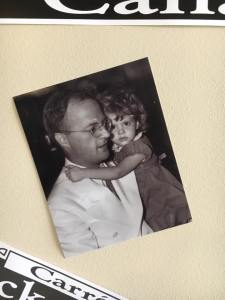
With my dad, then a newspaper reporter in New Orleans, later City Editor of the Houston Post. He grew up in New Orleans. Any way, having such a loving family, good memories, and such a fun celebration came a long way toward making being eighty seem pretty good.
Grieving Life’s Diverse Losses
Today I am realizing that when our children or couples we love divorce, there’s a mourning period involved. Particularly with friends that we only knew when they were married. We have to mourn and let go of those we have loved in relationship. It has nothing to do with thinking they should or shouldn’t divorce. It just involves coming to grips with the differences.
With a child we knew and loved long before they married or divorced, we at least have something to look back to, but not with the spouse that we only knew as a unit with our child. They simply aren’t the same person now that we have only known. There really is a necessary time of mourning, particularly if we truly came to love them as part of that unit. And mourning involves the stages of grief…..denial, anger, bargaining, depression and acceptance.
I think recognizing this can help us not bog down hopelessly at any point in the process. I am also beginning to reflect on the possibility that we have to go through a similar process when either people we love or we ourselves change because of aging or illness.
I realize now that I need to cut myself some slack and take time to reflect on the effects of this recent period in my life that includes my own losses of abilities and joys through age and illness, my husband experiencing losses from these also, one of our adult children and a spouse that I loved deeply as a couple for many years now being divorced, and friends that I have loved and only known as a couple divorcing.
The last year and a half have simply been overwhelming and I have been bogged down in emotional denial of some of these things and in anger over others.
Hopefully, recognizing this and my need for grace will help me move through to the peace of acceptance.
Connecting with God in the Hard Times through Praise
For the fourth Sunday of each month, I prepare and give the welcoming and introduction part of our worship service. I study the Lectionary Scriptures for that Sunday and prepare a short reflection and prayers as the introduction to the service.
I always start preparing ahead of time and try to listen to the particular Lectionary scriptures for that Sunday as if God is speaking to my own heart and situation. My Sunday in May was a few days after my husband’s surgery for lung cancer.
The first reading was from Acts 1 after Jesus ascended into heaven leaving his disciples praying together as they wait anxiously for the coming of the promised power of the Holy Spirit.
These Scriptures describe Christianity being born. The disciples are trying to learn to trust God even when they can no longer see Jesus. But when things are going badly, they still become anxious. Jesus has asked God to protect not only them, but all of us that follow him. So we, just like our brothers and sisters from the very beginning, can bring our fears to God. The followers of Jesus, not just in church on Sundays, but even through our internet connections, gather through prayer.
The second reading, 1 Peter, tells us to rejoice when we are sharing Christ’s suffering for we are blessed by the Spirit of God, resting on us. And after we have suffered a little while, the God of all grace will himself restore, support, strengthen, and establish us.
Letting go of fear of suffering is a challenge that I often don’t manage until I’m overwhelmed. But, when I do, I have found that I can let go of my fear by praising and thanking God for all He has done for me. It is much better when I don’t wait for times of obvious blessings to praise and thank God. When I actually praise God in the hard times, I realize that then suffering can bring me closer to him. That praise particularly connects me to God. God doesn’t need praise, we need to praise God. It changes our focus and gives us a new perspective that opens our eyes to the blessings all around us.
Here are some generic possibilities for praise and thanksgiving in hard times that I included in my reflection and prayers for Sunday worship.
God, our father, we praise your glory. You are perfect beauty far beyond what I have ever seen. You are truth that transforms my faith and fills me with your Spirit. You are the life changing power of grace that gives me inner strength. You are perfect love that can heal my heart, mind, body, and spirit.
Thank you for the reflections of your glory that I see in the beauty of nature. Thank you for your Spirit increasing my faith by opening my mind when I seek your truth in the Scriptures. Thank you for grace that strengthens me when I pray in times of suffering. And thank you most of all for your perfect love expressed in Jesus that heals and opens my heart to You.
Since I am a devout coward and a congenital worrier, I often miss God’s call to praise and thanksgiving and have to become almost bedridden with the pain of Fibromyalgia before I remember to cast my cares on the God who loves me tenderly and unconditionally. But when I not only praise in such general things, but move on to specific large and small blessings, such as our children who give us such wonderful support, the plethora of bright red cardinals outside my window, songs of praise coming from within that lift my heart and mind to God, even strangers in doctors’ waiting rooms and people who connect with me across the world through blogs, that pray for us and I for them, and perhaps most of all, the powerful surges of the sometimes forgotten tenderness I feel for my husband, then the grace of joy bubbles up from deep inside me and my heart joins my mind in giving praise to God.
We Are All Defective. It’s Another Word for Human.
This is a face book post by the author, Anne Lamott
We all secretly think we are defective–this is why our parents were unhappy, or unfaithful, or abusive, or whatever. Believing this gave us our only shot at control in households that were chaotic or cold: If we were the problem, then it meant our caregivers were good parents, capable of nurture and the healthy raising of children. And it meant we could correct our defects, and then our parents would be happy, finally, be nice to each other, and stop drinking.
I have spent 30 sober years healing from this survival tactic, of thinking I am annoying or a screw-up. I have just toured the country promoting a book on mercy, called HALLELUJAH ANYWAY, whose main premise is that if we practice radical self-care and forgiveness, this will heal us and radiate out to our families and communities, bringing peace.
However, I have done something so out there, so On Beyond Zebra, that it drew into question every aspect of that guiding principle (i.e., that I am NOT defective). I thought I was 80% over this. As a child, I agreed to believe it because it helped my family function and helped the other members feel better about themselves, because at least they weren’t screwed-up, annoying me.
But I have outdone myself. I have done something so amazingly incompetent and so profoundly inconvenient to so many people I love that it will allow you to forgive yourself for almost anything. I will be your new gold standard; you will no longer be secretly convinced that you have Alzheimer’s. You will think you are just fine and have been overreacting. You will understand why my son, Sam, so frequently mentions the website A Place for Mom to me.
So: six months ago, I was invited to give a talk at the 2017 TED conference in Vancouver. This was very heady stuff, as sometimes millions of people see these talks online and might want to buy your new book, saving you from financial ruin and having to go live at the Rescue Mission and live on government cheese, which is very binding.
So I wrote and sort of memorized my 15-minute talk, and my various caseworkers worked for months to get me to Vancouver this morning from Seattle, where I did a reading last night.
I got to the airport an hour ago, got out my passport, and tried to get a boarding pass for a flight I’ve been booked on and obsessing about for 3 months.
That’s when I’d realized I had grabbed the wrong passport at home. The expired one.
Therefore, I would not be able to catch a flight to our tense new enemy, Canada, to give the biggest and most important talk of my life.
It is hard to capture my feelings at that moment: terror, shame, self-loathing and catastrophic thoughts about my doomed future.
I texted my agent, ran to TSA, pleaded my case and how I must be HUGELY important (albeit brain damaged) to be giving a TED talk.
No go. And no way to get on board any flight to Canada. I was doomed.
But those 30 years had not been in vain. Because within a few minutes, I had remembered 3 things:
God always makes a way out of no way.
Radical self-care and forgiveness are always possible – always — and always the way home.
And HALLELUJAH ANYWAY is half about how there is nothing outside of yourself that can heal or fill you or make you whole unless you are waiting for an organ. A TED talk was never going to have been able to fill me with respect. That’s an inside job.
I hate and resent this, but it is the truest truth — union with God or Goodness, including our safest, most trusted friends, and deep friendliness and forgiveness to one’s sometimes very disappointing self.
So five minutes later, my agent and the TED people had worked out a plan whereby as I write this my son is flying to Seattle with my passport. He’ll be here in 5 hours. There’s a late flight to Vancouver, and the TED people have created a space for me tomorrow morning out of thin air. Talk about making a way out of no way.
Additionally, I charged $30 worth of medicine, magazines and a sack of peanut butter M&Ms.
I’m not sure what the message of this is. I quoted Samuel Goldwyn in Bird by Bird, who told screenwriters that if they had a message to send a telegram. All I have to offer is this story: that we get to make huge mistakes, and that the one I made this week is almost certainly bigger than any of yours. But neither of us is defective. We are perfect children of the universe, although maybe still a little funny around the edges, with tiny character issues and failing memories. We possess every day the capacity to extend gentleness and forgiveness to ourselves and those suffering nearby.
I am smiling gently at all the miserable frantic people at the airport and telling them I like their hats. I gave a sobbing child my IHOP crayons. (This is the path to world peace.) And I will never, ever hear the end of this from the people who love me. Ever. Believe me. Written by Anne Lamott on her face book page on 4/28/2017.
Forgiveness, the Heart of Love and the Core of Christianity
In the Gospel of John, when the risen Jesus appears to the frightened disciples, he says something unexpected and amazing. He tells them, if they forgive anyone’s sins, they’re forgiven. But if they don’t, then they aren’t. This isn’t power, this is responsibility. Jesus has spent three years trying to make them understand that receiving forgiveness and forgiving others are inseparable. In his agony on the cross he prays, “Father, forgive them for they know not what they do.” That prayer was not only for all those who played a part in his physical crucifixion that day, but for all of us who continue to crucify him in each other.
The humbling, often heartbreaking, recognition of the harm we have done to someone is designed to bring the life changing acceptance of God’s forgiveness that gives us the grace to forgive others. It’s all one spiritual process. Sometimes, our first clue to what we need to ask forgiveness for is what we cannot forgive in another. And over and over the message is the same: forgiveness is the heart of love, the core of Christianity, the gift of the Holy Spirit, and it’s our commission. And there is no escape clause in the small print even about forgiving repeat offenders. Remember the seventy times seven?
In the Gospel of Matthew Jesus says, Whenever you are praying, forgive if you have anything against anyone, so that your Father in heaven may also forgive you your trespasses. This isn’t just a whim of God. It’s a cause and effect that was designed into the human condition. Listen closely. Jesus died so that we might be forgiven, but in order to accept forgiveness, we have to admit humbly and sorrowfully when we need it, so we can be freed by grace to pass forgiveness on. This is the key to the kingdom of heaven that Jesus gave us, because all fall short of the glory of God.
Note: Forgiving a broken person does not mean allowing them to abuse you or anyone else. God forgives them, but doesn’t remove consequences that can make them recognize the need to change.

